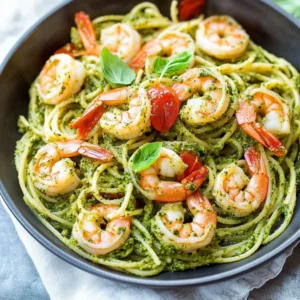
Imagine twirling perfectly cooked spaghetti coated in vibrant, aromatic pesto, with juicy shrimp nestled throughout, creating a dish that’s both comforting and invigorating. The enticing aroma of fresh basil and garlic wafts through the air as you prepare this delightful shrimp pesto pasta.
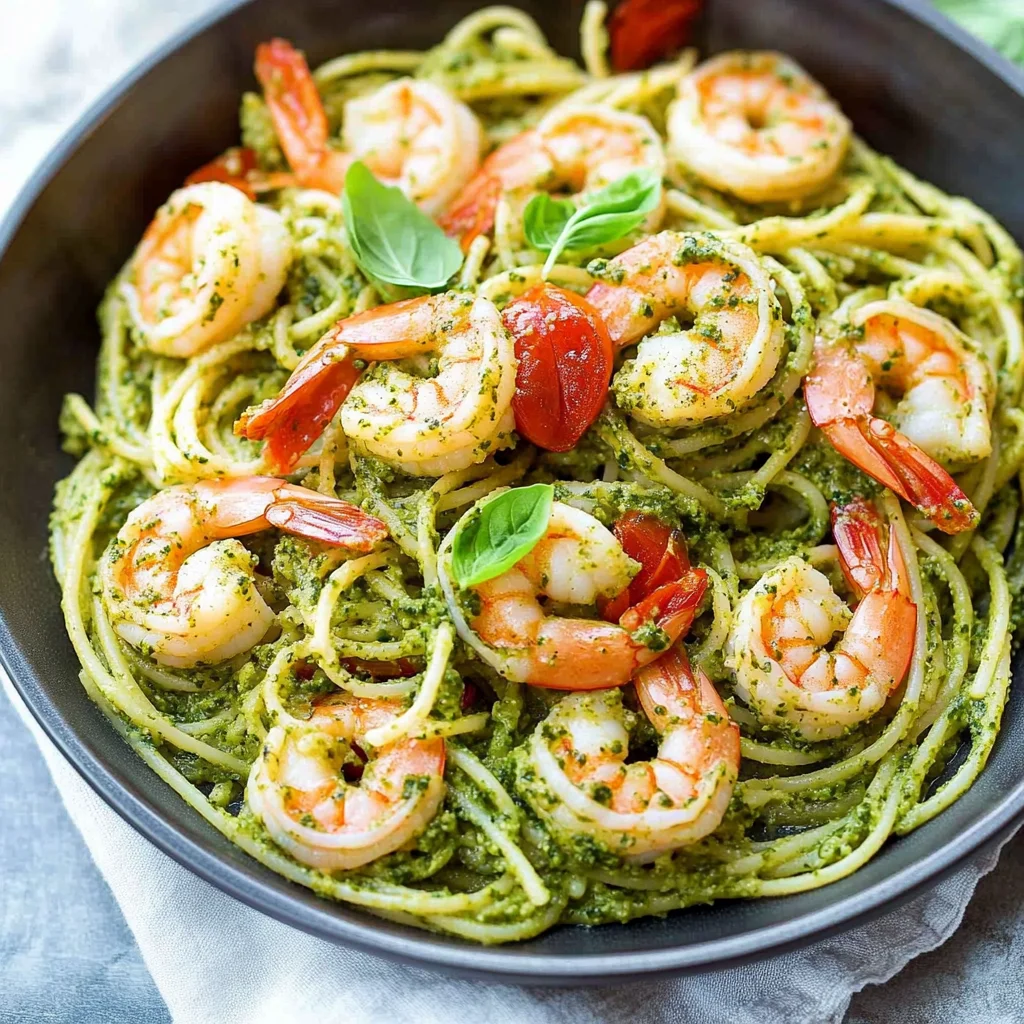
This recipe is not only quick and easy, taking just 30 minutes from start to finish, but it also guarantees satisfaction with every bite. Whether you’re cooking for family or enjoying a solo dinner, this dish promises to impress and nourish your spirit.
Quick Overview
Shrimp pesto pasta is a delightful dish that combines succulent shrimp with a vibrant, creamy basil pesto sauce and perfectly cooked spaghetti. The flavor profile is fresh and savory, making it an ideal choice for a quick weeknight dinner or a special gathering. Enjoy this meal hot, garnished with extra parmesan and fresh basil!
As you prepare to dive into the cooking process, let’s explore each step in detail.
Why This Recipe Works
- Shrimp pesto pasta achieves a perfect balance of bright flavors and comforting textures in every bite.
- The harmonious blend of fresh basil and succulent shrimp creates an irresistible dish that delights the senses.
- This recipe is not only reliable but also quick, making it an ideal choice for busy weeknight dinners.
- Ultimately, the careful technique ensures each component shines, resulting in a satisfying meal everyone will love.
Now that we’ve explored why this dish works so well, let’s dive into the step-by-step preparation!
Essential Ingredients
To create a delicious shrimp pesto pasta, gather the following essential ingredients:
- 12 oz spaghetti: You can use any pasta shape you prefer, but spaghetti complements the sauce beautifully.
- 1 tbsp salt: This helps season the pasta water, enhancing the flavor of the spaghetti.
- 1 lb large shrimp: Peeled and deveined shrimp ensure a quick cooking time and a delightful texture.
- 2 tbsp olive oil: Use high-quality oil for sautéing to enhance the overall flavor of the shrimp.
- 2 cloves garlic: Minced garlic adds aromatic depth; fresh garlic is recommended for the best taste.
- 1/2 tsp red pepper flakes: Optional for those who enjoy a bit of heat in their dish.
- 1 tsp salt: Adjust to your taste when seasoning the shrimp for optimal flavor balance.
- 1/2 tsp black pepper: Freshly ground black pepper elevates the seasoning profile of the dish.
- 2 cups fresh basil leaves: Packed basil provides vibrant flavor; ensure it’s fresh for maximum aroma.
- 1/2 cup parmesan cheese: Grated parmesan adds richness; freshly grated cheese melts better than pre-grated options.
- 1/2 cup olive oil (extra virgin): A good quality extra virgin olive oil enhances the creaminess of your pesto sauce.
- 1/3 cup pine nuts: Toasted pine nuts bring out a nuttier flavor in the pesto; consider lightly roasting them before use.
- 1/4 tsp salt: Use this to season the pesto, balancing flavors as you blend it together.
- 1/4 tsp black pepper: Freshly cracked pepper gives a subtle kick to your homemade pesto sauce.
- 1/4 cup parmesan cheese (for garnish): Additional grated parmesan on top adds flavor and presentation appeal to your dish.
- 1 tbsp fresh basil: Chopped fresh basil enhances visual appeal and freshness when used as a garnish.
The full ingredients list, including measurements, is provided in the recipe card directly below.
How to Make shrimp pesto pasta
Step 1: Prepare the Pasta:Bring a large pot of salted water to a rolling boil, creating a fragrant steam. Add 12 oz of spaghetti and cook until al dente, about 8-10 minutes.
Step 2: Cook the Shrimp:In a large skillet, heat 2 tablespoons of olive oil over medium heat. Sauté 2 cloves of minced garlic and red pepper flakes for 30 seconds, releasing a delightful aroma.
Step 3: Season and Sauté:Add 1 lb of peeled and deveined shrimp to the skillet, seasoning with salt and black pepper. Cook for 2-3 minutes per side until the shrimp turn pink and opaque.
Step 4: Make the Pesto Sauce:In a food processor, combine 2 cups of fresh basil leaves, grated parmesan cheese, toasted pine nuts, minced garlic, salt, and black pepper. Pulse until finely chopped before drizzling in olive oil.
Step 5: Combine Everything:In the skillet with the cooked shrimp, add the drained pasta and smooth pesto sauce. Toss everything together, adding reserved pasta water gradually for your desired creaminess.
With that deliciously vibrant dish ready to serve, let’s explore some perfect pairings that elevate your shrimp pesto pasta.
Common Mistakes to Avoid
- One common mistake in shrimp pesto pasta is overcooking the shrimp, which can lead to a rubbery texture that detracts from the dish.
- Another frequent error is skimping on the reserved pasta water, which is essential for achieving a creamy and cohesive sauce consistency.
- Lastly, not allowing the garlic to sauté just until fragrant can result in a bitter taste that overshadows the fresh flavors of the pesto.
By avoiding these pitfalls, you can elevate your shrimp pesto pasta experience to a whole new level.
Pro Tips for Best Results
1. Make sure to reserve a cup of pasta water before draining; it’s key for adjusting the pesto sauce’s consistency.
2. Cook the shrimp just until pink and opaque; overcooking can make them tough and chewy, ruining your shrimp pesto pasta.
3. Toasting the pine nuts before adding them to the pesto enhances their flavor, giving your sauce an extra depth of richness.
With these tips in hand, you’re ready to create a delicious shrimp pesto pasta that will impress everyone at the table!
Make It Your Way
- Feel free to customize your shrimp pesto pasta by swapping out the spaghetti for your favorite gluten-free or whole grain pasta, offering a healthier twist.
- For those who prefer a different protein, chicken or scallops can be delightful alternatives to shrimp.
- You can also experiment with the pesto by adding spinach or kale for an extra boost of nutrients and flavor.
- Don’t hesitate to adjust the garlic and red pepper flakes according to your taste for a personalized kick!
With these customization ideas in mind, let’s dive into the step-by-step preparation of this delicious shrimp pesto pasta.
What to Serve With It
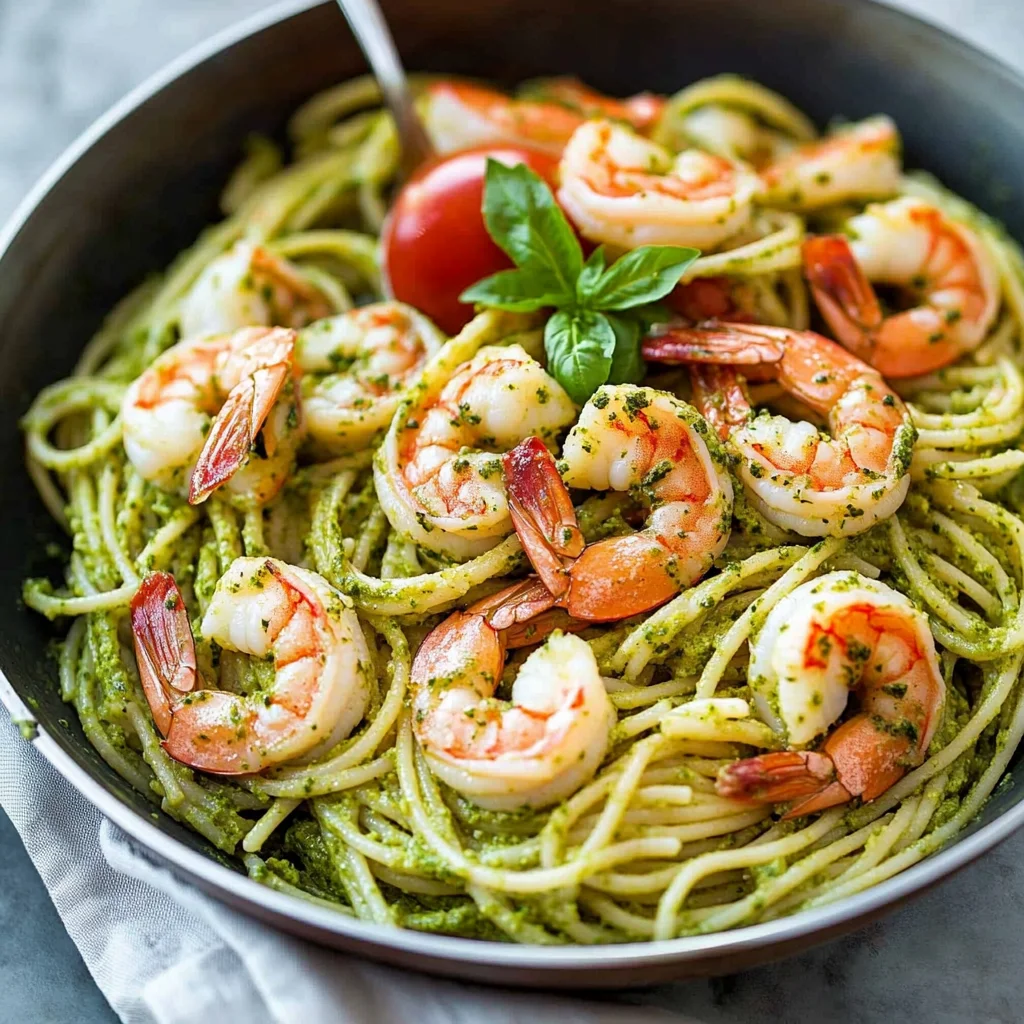
For a delightful meal, pair your shrimp pesto pasta with a simple arugula salad drizzled with lemon vinaigrette. A chilled glass of white wine, such as Sauvignon Blanc, complements the dish beautifully. Garlic bread serves as a perfect side for soaking up any remaining pesto sauce.
Now that you have the serving suggestions, let’s dive into how to store and reheat any leftovers!
Make-Ahead & Meal Prep
Shrimp pesto pasta can be prepared ahead by making the pesto sauce and cooking the shrimp in advance. Store them separately in airtight containers in the refrigerator for up to two days. Avoid combining the pasta until ready to serve, as it may become soggy. Enjoy a quick, flavorful meal when needed!
This preparation method makes it easy to enjoy your delicious shrimp pesto pasta any night of the week.
Storing & Reheating
To store your shrimp pesto pasta, place it in an airtight container in the refrigerator for up to 3 days. When reheating, gently warm it on the stovetop over low heat, adding a splash of reserved pasta water to maintain its creamy texture and vibrant flavor. Enjoy your delicious meal again! Transitioning from leftovers, let’s explore some delightful serving suggestions.
Troubleshooting & Fixes
If your shrimp pesto pasta turns out too dry, add reserved pasta water gradually until you achieve the desired creaminess. If the shrimp are tough, they may have been overcooked; aim for 2-3 minutes per side until they’re pink and opaque. To prevent blandness, taste the pesto before mixing and adjust seasoning as needed.
Now that you’ve addressed potential pitfalls, let’s explore tips for perfecting your shrimp pesto pasta!
FAQ
What type of pasta is best for shrimp pesto pasta?
Spaghetti is recommended, but you can use any preferred pasta for shrimp pesto pasta.
How can I store leftover shrimp pesto pasta?
Store leftovers in an airtight container in the refrigerator for up to 3 days.
Can I customize the heat level in my shrimp pesto pasta?
Yes, adjust the red pepper flakes according to your spice preference for shrimp pesto pasta.
Now that you know how to prepare this delightful dish, let’s explore some serving suggestions and variations!
Shrimp Pesto Pasta
Ingredients
- 12 oz spaghetti or your preferred pasta
- 1 tbsp salt for pasta water
- 1 lb large shrimp peeled and deveined
- 2 tbsp olive oil for cooking
- 2 cloves garlic minced
- 1/2 tsp red pepper flakes optional, for heat
- 1 tsp salt to taste
- 1/2 tsp black pepper to taste
- 2 cups fresh basil leaves packed
- 1/2 cup parmesan cheese grated
- 1/2 cup olive oil extra virgin
- 1/3 cup pine nuts toasted for flavor
- 2 cloves garlic minced
- 1/4 tsp salt to taste
- 1/4 tsp black pepper to taste
- 1/4 cup parmesan cheese grated
- 1 tbsp fresh basil chopped, for garnish
Method
- Bring a large pot of salted water to a boil. This helps to season the pasta as it cooks.
- Add the spaghetti and cook according to package instructions until al dente, usually about 8-10 minutes.
- Once cooked, reserve 1 cup of pasta water, then drain the pasta in a colander.
- In a large skillet, heat 2 tablespoons of olive oil over medium heat.
- Add the minced garlic and red pepper flakes, sautéing for about 30 seconds until fragrant. Be careful not to burn the garlic.
- Add the shrimp to the skillet, seasoning with salt and black pepper. Cook for 2-3 minutes on each side until the shrimp are pink and opaque.
- Remove the skillet from heat and set aside.
- In a food processor, combine the basil leaves, parmesan cheese, pine nuts, minced garlic, salt, and black pepper.
- Pulse until the ingredients are finely chopped.
- With the processor running, slowly drizzle in the olive oil until the mixture is smooth and creamy. Adjust seasoning to taste.
- In the skillet with the shrimp, add the drained pasta and pesto sauce. Toss everything together, adding reserved pasta water a little at a time to reach desired consistency.
- Serve immediately, garnished with additional parmesan cheese and fresh basil.